•Introduction
This project explores a new future for trail running shoes:
an adjustable-friction outsole system that adapts to changing terrain within a single run, enhancing runners' performance, protection, and confidence across mixed conditions.
Context: Degree Project at Lund University
Year: 2022
Duration: 18 weeks
Role: Industrial Designer
•Challenge
Why adjustable outsole friction?
Traction demand in trail running is never constant.
Trail running is defined by constant change—loose gravel, wet rock, steep climbs, sudden descents. Yet most shoes still rely on a fixed traction profile, forcing runners to compromise with every transition. As terrain shifts, runners continuously adjust their posture and pace. When traction can’t adapt, stability breaks, performance drops, and confidence fades—especially during rapid uphill-to-downhill phases.
This raised a question: How might footwear adapt friction dynamically to support runners across mixed terrain within one journey?
•Design
Adaptive traction, redefined performance.
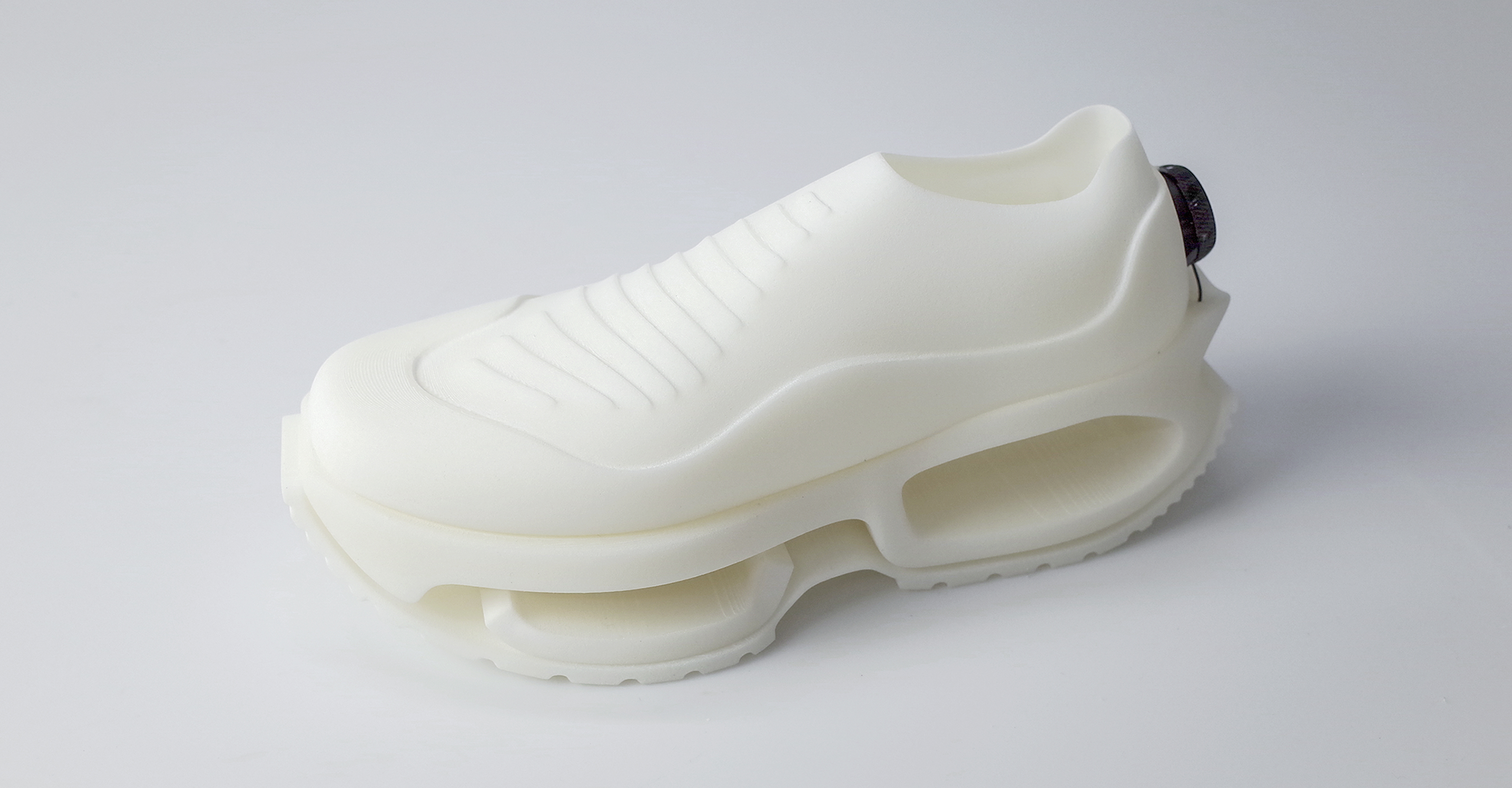
The concept 717 introduces an adjustable-friction outsole system that allows traction to adapt dynamically across mixed trail terrain within a single run.
Structure-enabled friction control.
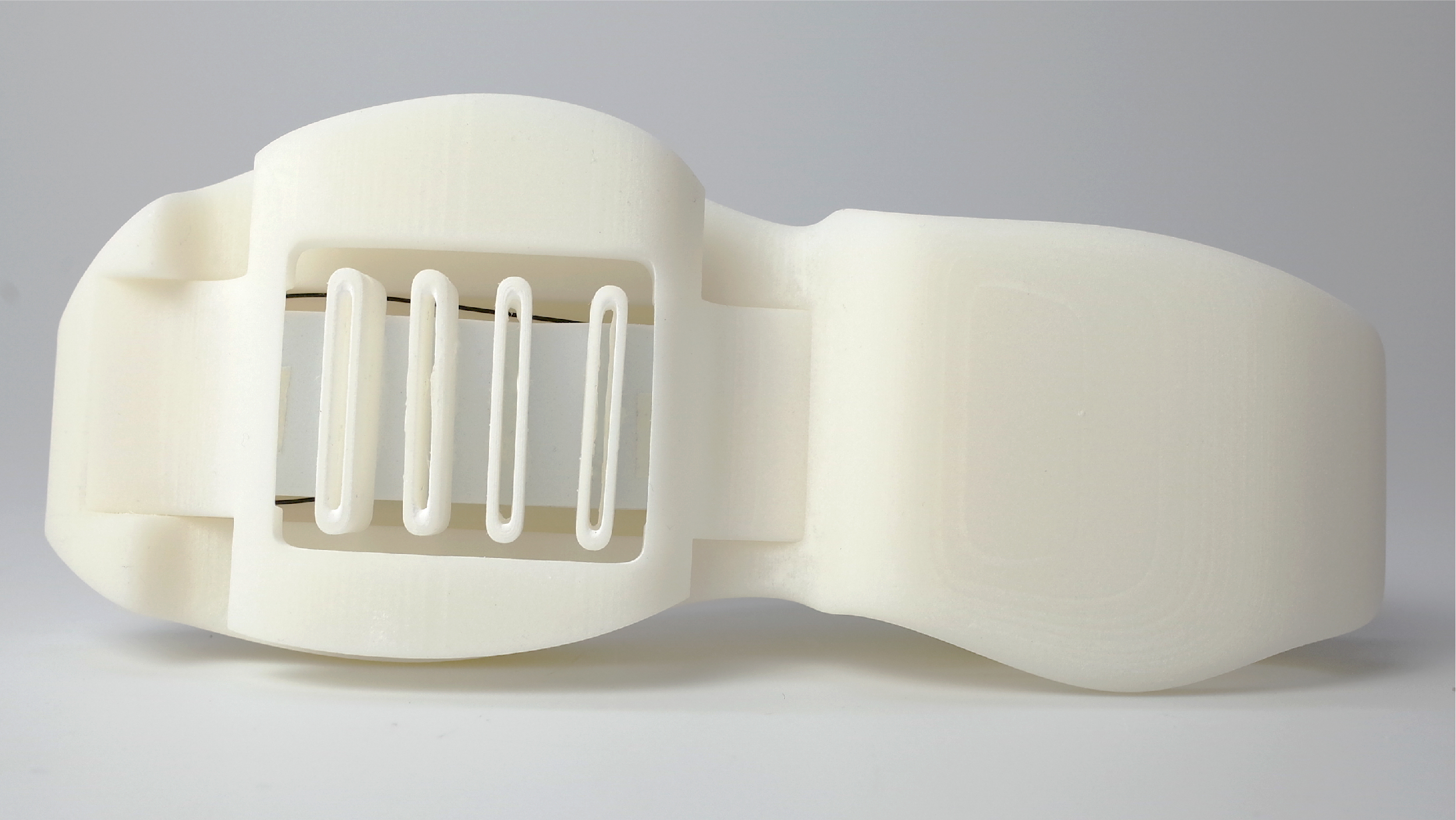
The friction-adjustment mechanism is integrated into the midsole, powered by a dial-driven tension system, enabling traction modulation to match different movement phases.
Dial-controlled traction adjustment.
Runners can tune grip through an intuitive rotational input, translating simple interaction into precise and stable friction control.
•Reflection
1. Exploring through physical prototyping.
This project highlighted the value of physical prototyping as a decision-making tool. Mechanical prototyping was used to test assumptions, reveal limitations, and translate conceptual ideas into grounded mechanisms - allowing physical constraints to actively shape design decisions.
2. Looking ahead: from concept to real-world performance.
(1) While the concept demonstrates structural and interaction feasibility, several critical questions remain for future development: the deeper exploration of material behaviour, durability, and load-bearing performance under use.
(2) In addition, real-world user testing would be essential to validate usability, reliability, and how the interaction performs under varying environmental conditions.
(3) Beyond this project, the underlying principle of adaptable friction points to broader opportunities for products that respond to changing contexts in everyday life, rather than fixed conditions.